Utilities
Choose your crew.
All Food Army utility sections now live on one movement page. Use the floating section menu to jump between workshops, seeds, gardens, community building, and activism.
 Soil
Seeds
Soil
Seeds
 Starts
 Water
Harvest
Water
Harvest
 Mutual Aid
01 / Hands-On Workshops
Learn by growing.
Show up with questions and leave with dirt under your nails: soil basics, compost, watering, seed starting, container growing, preservation, and simple garden planning for real homes and shared sites.
- Garden basics for first-time growers
- Compost, soil repair, and water-wise routines
- Food preservation and harvest planning
02 / Seed Storage
Protect the next harvest.
Seeds are local memory. Save what grows well here, label it clearly, store it safely, and keep a living seed commons moving between neighbors and seasons.
- Seed saving and drying stations
- Labeling, sorting, and neighborhood crop notes
- Seasonal seed swaps and starter kits
03 / Local Gardens
Turn open space into food space.
Backyards, balconies, empty beds, school gardens, church lawns, containers, and community plots can all become food infrastructure when the crew shows up together.
- Garden mapping and site intake
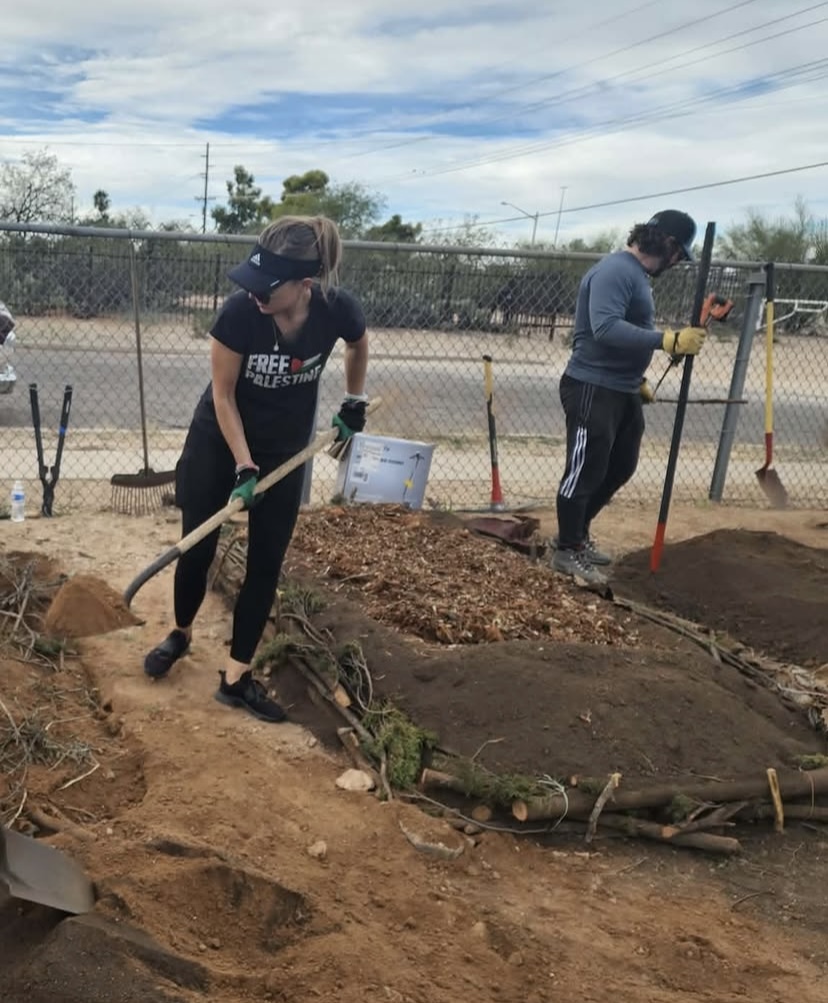
- Bed prep, watering plans, starts, and soil
- Harvest routes and shared maintenance days
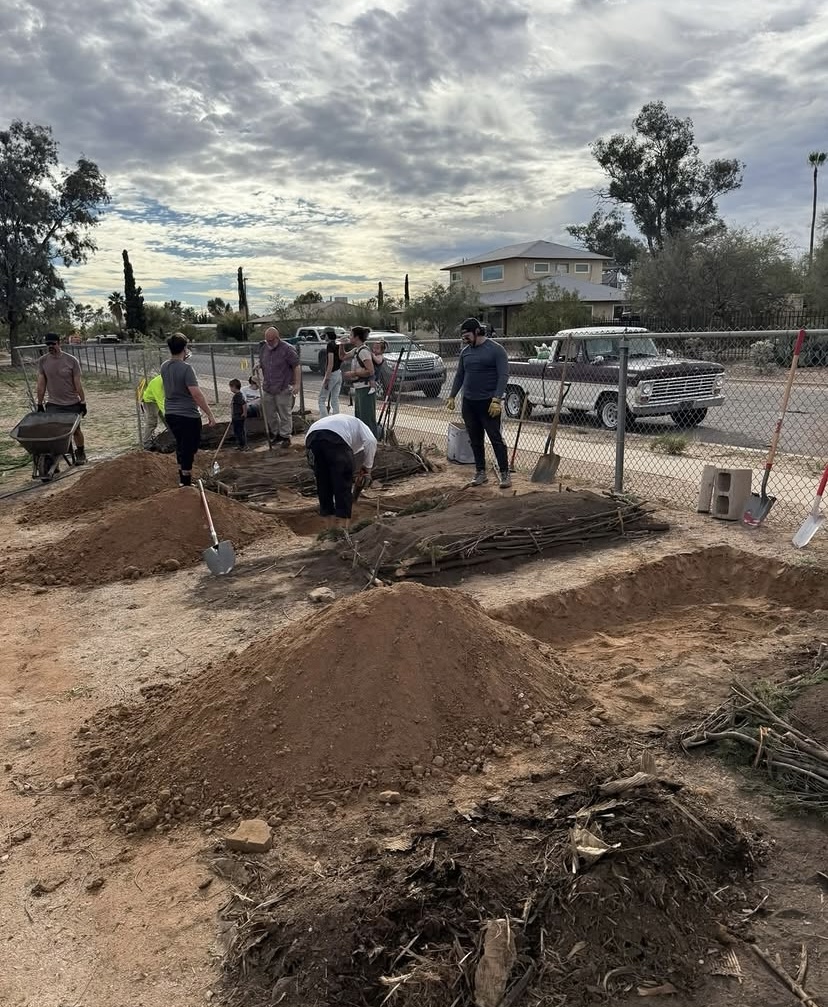
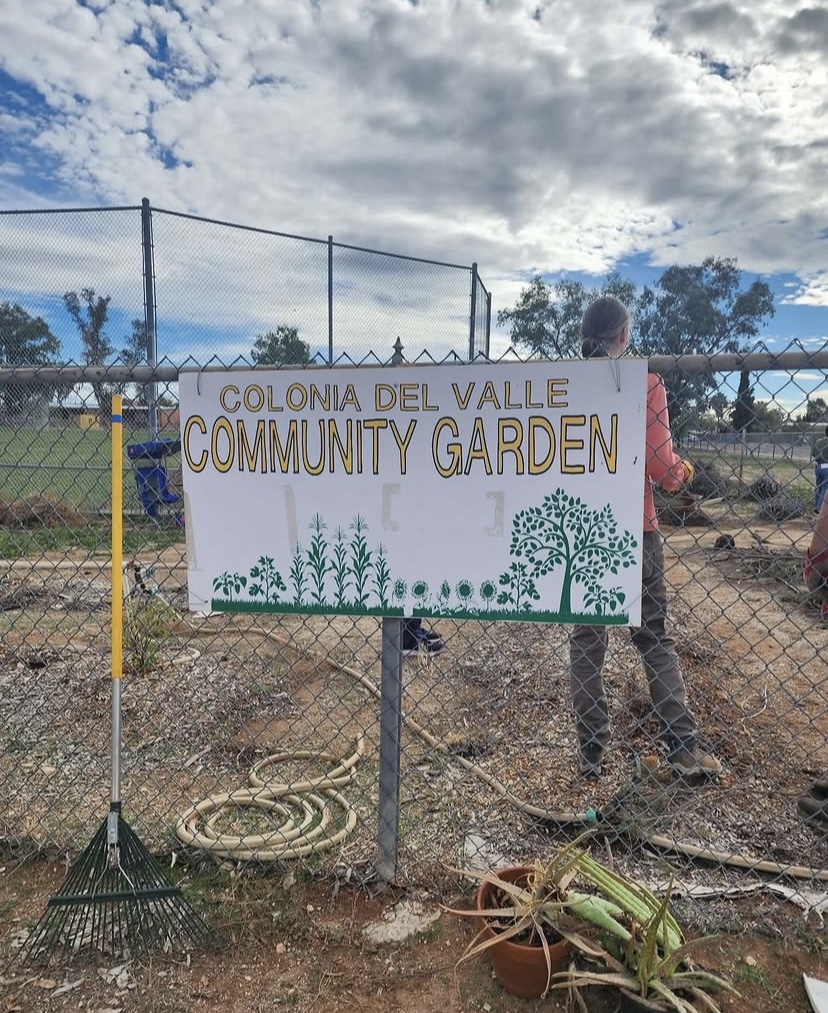
Colonia Del Valle Community Garden, Food Army’s first community garden, is located at Sky Islands Public High School, 6000 E. 14th Street, Tucson, Arizona. Built with volunteer labor and repurposed materials, it is managed with community members and local supporters.
04 / Build Community
Food is the meeting place.
Food Army grows relationships as much as vegetables: shared meals, resource tables, neighbor check-ins, mutual aid circles, skill swaps, and crews that know how to move together.
- Neighbor outreach and volunteer crews
- Tool sharing, rides, flyers, and local communication networks
- Family-friendly entry points for new growers
05 / Activism & Outreach
Food justice needs hands.
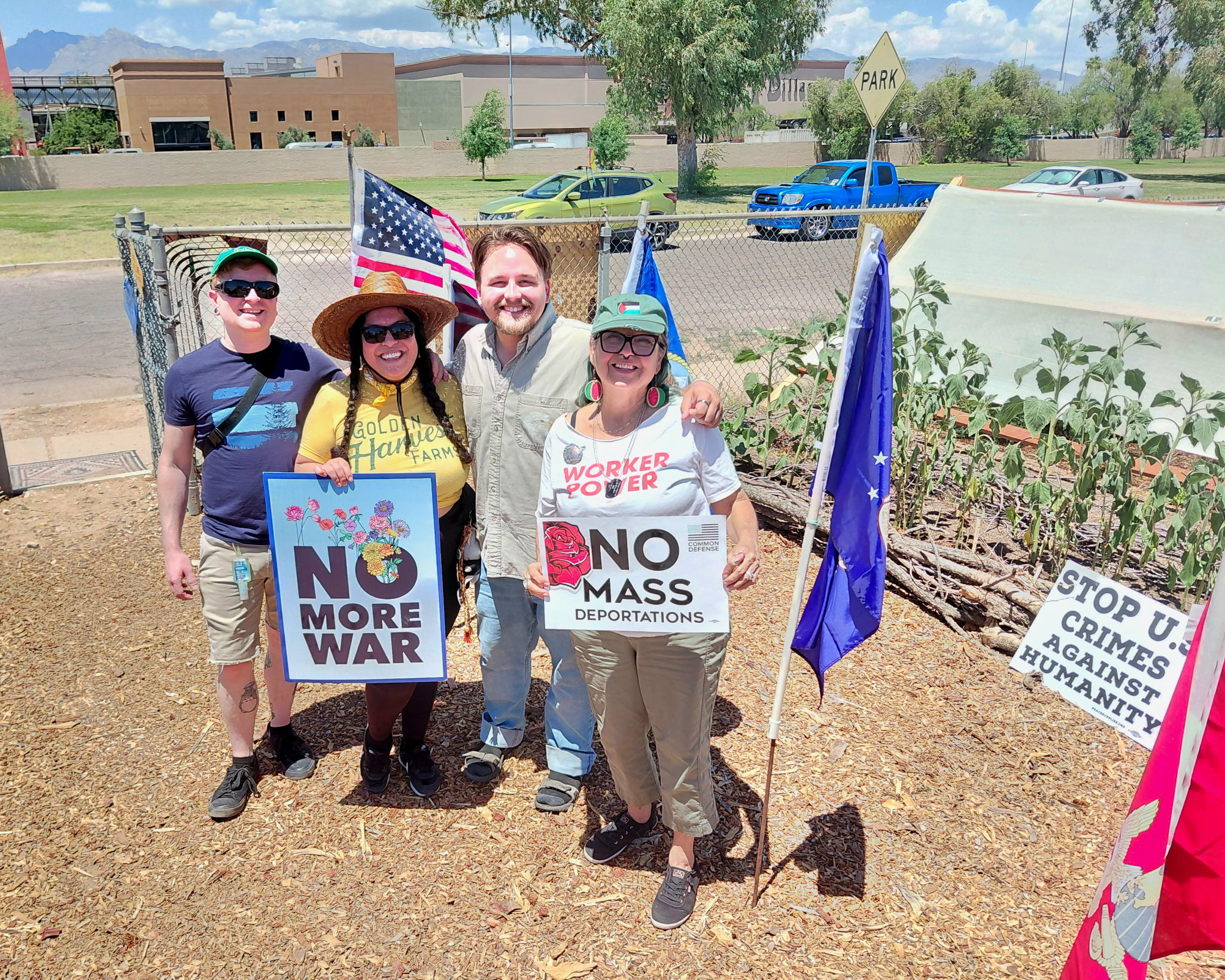
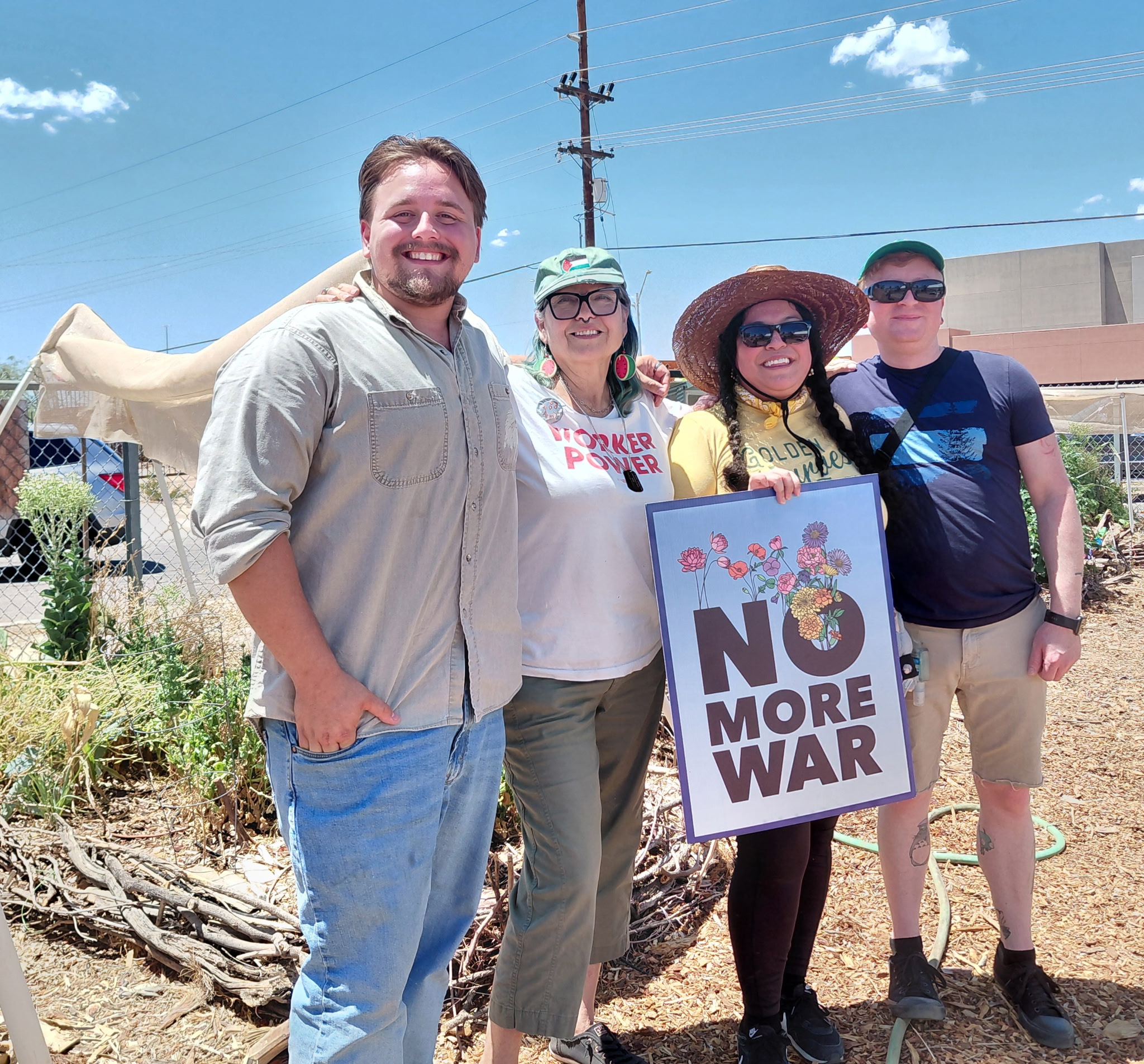
The movement pairs direct support with public presence: tabling, flyering, art, education, mutual aid, food access work, and pressure toward neighborhood-led solutions.
- Food access outreach and event support
- Flyers, posters, zines, and street-level visibility
- Donation runs and mutual aid distribution
The long-range push is 100 acres of productive land in Southern Arizona by Spring 2028, creating a network of community farms and gardens that strengthens food security, local resilience, and neighborhoods.
06 / Neighborhood Food Systems
Food-sharing systems supported by neighbors.
Food Army supports homegrown food, barter networks, resource sharing, skill exchanges, and community stewardship.
These systems help create stronger neighborhoods while promoting affordability, sustainability, and conservation.
- Food exchange, seed libraries, and tool sharing
- Composting, plant swaps, barter networks, and work exchanges
- Animal husbandry knowledge, harvest routes, and neighborhood support
One signup
Pick more than one lane.
Use the Contact page to choose every crew you want updates from. You can join one section or move between all of them.